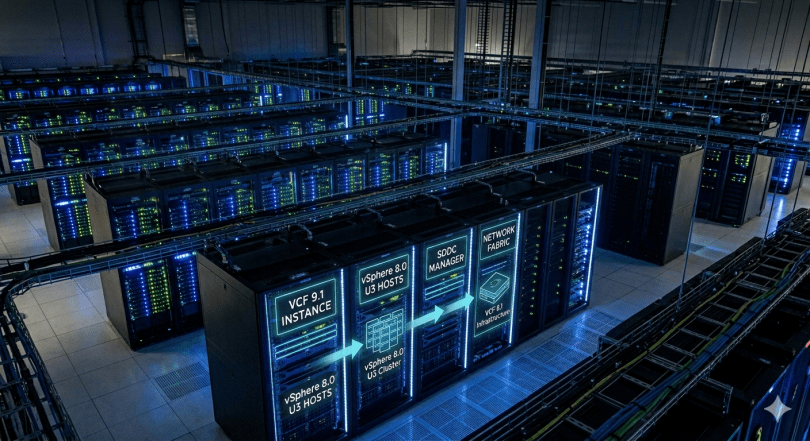
VMware Cloud Foundation 9.1: A Field Engineer’s Read

Broadcom released VMware Cloud Foundation 9.1 on May 5, 2026. The official messaging is all about AI. Ignore that for now. Here is what actually changed and what it means if you run these environments for a living.


First — What Is VCF?

VCF bundles vSphere, vSAN, NSX, and lifecycle management into one platform. You manage compute, storage, and networking together. One upgrade process. One support call. One control plane.

If you run standalone vSphere today, VCF is the same infrastructure — with automation and operational structure on top. It is not a replacement for your skills. It is a framework for running them at scale.

What Changed in 9.1 — Feature by Feature

Scale: 5,000 Hosts Per Instance

Read More »

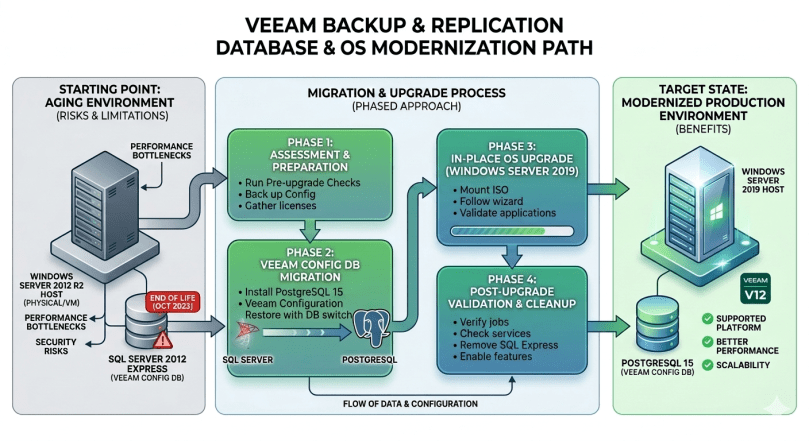
Migrating Veeam B&R from SQL Server to PostgreSQL and Upgrading from Windows Server 2012R2 to Windows Server 2019

If you’re running Veeam Backup & Replication on an aging Windows Server 2012 R2 host, chances are it was originally configured with a SQL Server Express backend — the default for older Veeam installations. With Veeam V12 standardizing on PostgreSQL and Windows Server 2012 R2 reaching end of life, the time to modernize is now.

This guide covers a complete, production-tested migration path: assessing your current environment, migrating the Veeam configuration database from SQL Server 2012 to PostgreSQL 15, and performing an in-place OS upgrade to Windows Server 2019 — all without rebuilding the server from scratch.

Read More »

Welcome to INITBT | Can Karahaliloglu, Senior IT Infrastructure Engineer

I have been working in IT infrastructure for 16 years. Not in meetings. Not in slide decks. In datacenters, racking servers, pulling cables, troubleshooting at 2am, and figuring out why something that worked yesterday suddenly does not work today.

Over the years I have worked across some of the most demanding environments you can find: semiconductor manufacturing, global banking, space agency operations, and large-scale cloud platforms. The one thing they all had in common: when something breaks, it costs real money, and someone needs to fix it fast.

This blog exists because this industry never stops moving, and not always in the right direction.

Read More »